


Support at Home
MyQRMed medical IDs may be suitable as a low-cost assistive technology for older Australians receiving Support at Home (formally home care package HCP). They help make important health information easier to access across home care, appointments, hospital transfers and unexpected health events. Under Support at Home, assistive technology is accessed through the Assistive Technology and Home Modifications (AT-HM) scheme based on the participant’s assessed needs and support plan.
MyQRMed offers a simple and practical option that may support safer care, clearer communication and more consistent information sharing across different settings. Suitability depends on the participant’s assessment, care plan and provider processes.
If MyQRMed is right for your needs, you can place your order through our aged care portal and include your aged care provider’s details. We then issue an invoice to the provider for approval and processing.
Commonwealth Home Support Programme (CHSP)
The Commonwealth Home Support Programme (CHSP) helps older Australians remain living at home and includes Assistive Technology – Equipment and Products for items that support safety, communication and everyday living. MyQRMed medical IDs may fit within this category where they support the client’s individual needs.
MyQRMed can provide a practical way to improve access to key health information across multiple care settings, which may be especially useful where several carers, services or health professionals are involved. Final approval sits with the CHSP provider and should align with the client’s assessed needs and internal processes.
If MyQRMed is right for your needs, you can place your order through our aged care portal and include your aged care provider’s details. We will then issue an invoice directly to the provider.

Developed by a Registered Paramedic
Why Accessible Health Information Matters
For many older Australians receiving Support at Home or CHSP, health and care information is spread across multiple settings — including home support services, GPs, specialists, hospitals, pharmacies and family carers. When important details are hard to communicate or not immediately available, care can become less coordinated, less consistent and more stressful for everyone involved.
Evidence shows why this matters:
-
80% of Australians aged 65 and over live with at least one chronic health condition, and 28% live with 3 or more. This means many older people need important health information to be available across multiple care settings and providers.
-
The Australian Commission on Safety and Quality in Health Care warns that communication failures and poor documentation can lead to errors, misdiagnosis, inappropriate treatment and poor care outcomes.
-
40% of older adults in Australia are dispensed more than 5 medications concurrently, and national safety guidance warns that poor communication and inadequate documentation can lead to errors, misdiagnosis, inappropriate treatment and poor care outcomes.

MyQRMed is designed to help reduce that information gap by making selected details easier to access when needed. It can support clearer handovers, more consistent communication and better continuity across the people involved in someone’s care.

Trusted By Thousands
Registered NDIS Provider

Paramedic Designed
Developed by Paramedics

Australia Owned
Trusted nationwide


Registered NDIS
Provider
4.9 Star Review
Proven peace of mind

How MyQRMed Works
Simple 3-Step Setup for Instant Peace of Mind


Choose Your ID
1
Select the MyQRMed medical alert bracelet, necklace or device that is right for you.
Set Up Your Profile
2
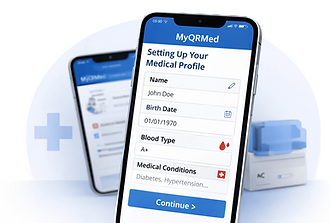
Add your important medical and emergency contact details in your secure QR medical ID profile.
Scan For Access
3
When needed, your medical alert ID can be scanned to show important health & emergency information.

Information your MyQRMed ID makes available:
.png)


Conditions
Allergies
SOS Contacts


Medications
Care Team
Plus more
Your medical alert bracelet or necklace links to a secure profile that can be updated anytime as your health information changes.
Your Medical Alert
Profile


People Receiving Care at Home
For older Australians receiving care at home, a MyQRMed medical ID helps carers, family members and health professionals access important health information in seconds (medical conditions, medications, allergies, emergency contacts) when it is needed most.
Profiles can include health conditions, medication lists, allergies, emergency contacts, care notes and other important information so support stays more consistent across home care visits, GP appointments, specialist visits, hospital presentations and everyday life. Carers and health professionals can scan for quick access — no app required — and details can be updated anytime as health needs or care arrangements change.
This helps reduce communication gaps and supports safer, more informed care across different settings.

Who MyQRMed Helps and How
People receiving care at home
Who: Older Australians receiving Support at Home, CHSP, private in-home care, or help from family members.
How it helps:
-
Gives carers, family and health professionals quick access to important health information.
-
Can show medical conditions, medications, allergies and emergency contacts in one place.
-
Helps keep information consistent across home visits, appointments and hospital presentations.
-
Supports safer care when information is hard to recall in the moment.
People managing multiple health conditions
Who: Seniors living with one or more medical conditions who need important information to be easy to access.
How it helps:
-
Keeps key health details available in one simple profile.
-
Helps share accurate information across GPs, specialists, hospitals and support workers.
-
Reduces reliance on memory, paperwork or verbal handovers.
-
Makes it easier for others to understand important health needs quickly.
People taking multiple medications
Who: Seniors who take several medications or have changing prescriptions.
How it helps:
-
Allows medication information to be kept current and easy to access.
-
Can include allergy details and other important safety information.
-
Supports clearer communication during appointments and unexpected health events.
-
Helps carers and health professionals access the right information faster.
People with memory concerns or cognitive decline
Who: Seniors experiencing memory loss, confusion, or cognitive changes who may benefit from clearer identification and support information.
How it helps:
-
Can provide identification, emergency contacts and important health details in seconds.
-
Helps reduce confusion when speaking is difficult or details are hard to remember.
-
Supports more consistent care across family, carers and healthcare settings.
-
Can include care notes or other important information that helps others respond appropriately.
People living independently
Who: Seniors who want to maintain independence while making important health information easier to access if needed.
How it helps:
-
Supports greater confidence at home and in the community.
-
Helps ensure important information is available during appointments or emergencies.
-
Provides reassurance for both the individual and their family.
-
Offers a simple, practical safety support without changing everyday routines.
People attending regular medical appointments
Who: Seniors who regularly see GPs, specialists, allied health providers or attend hospital appointments.
How it helps:
-
Makes it easier to share current health information across different providers.
-
Supports smoother communication at appointments and during care transitions.
-
Helps reduce repeated explanations and missing details.
-
Keeps important information available when moving between home, clinics and hospital settings.
Family members and carers
Who: Families, carers and support people helping manage day-to-day care and health information.
How it helps:
-
Provides peace of mind that important information is easy to access.
-
Helps support more consistent communication across everyone involved in care.
-
Reduces the pressure of needing to be present at every appointment or situation.
-
Makes it easier to keep health details updated as needs change.
Seniors with allergies or urgent health information
Who: People who need allergies, medical conditions or other important details to be available quickly.
How it helps:
-
Makes critical information easier to access in urgent situations.
-
Helps others see key health details without relying on memory or paperwork.
-
Supports safer, more informed decisions when quick access matters.
-
Keeps emergency contacts available when needed most.
Understanding MyQRMed, Support at Home and CHSP
How MyQRMed fits within Aged Care
MyQRMed medical IDs are designed to support safer care, clearer communication and easier access to important health information across home care visits, appointments, hospital transfers and everyday support. For people receiving aged care at home, MyQRMed may be considered as a low-cost assistive technology where it supports the person’s individual needs and care arrangements.
Because MyQRMed helps make key health information easier to access, it may be relevant where communication, identification, consistency of care or access to medical details is important. MyQRMed is not listed by name as a specific funded item, so approval is not automatic. Suitability depends on the person’s assessed needs, support plan and the provider’s internal processes.
Support at Home
Support at Home replaced the former Home Care Packages Program on 1 November 2025. Under Support at Home, assistive technology is accessed through the Assistive Technology and Home Modifications (AT-HM) scheme and must align with the older person’s assessed needs and approved support plan.
MyQRMed medical IDs may be considered where they support communication, access to important health information, safer care and independent living at home. QR medical IDs are not expressly named in the AT-HM list, so the safest position is that MyQRMed may be suitable where it aligns with the person’s needs and is approved by their assessor or provider.
How Support at Home ordering works
-
The person is assessed through My Aged Care.
-
If appropriate, MyQRMed is discussed with the assessor, care partner or provider as a low-cost assistive technology option.
-
The provider decides whether it fits the person’s assessed needs and support plan.
-
If approved, the order can be submitted through our aged care portal with the provider’s details included.
-
We issue an itemised invoice to the provider for approval and processing.
Commonwealth Home Support Programme (CHSP)
The Commonwealth Home Support Programme helps older Australians remain living at home and continues as a separate program until at least 30 June 2027. CHSP includes Assistive Technology – Equipment and Products, which can cover items that support safety, communication and everyday living depending on the person’s needs and the services offered by the provider.
MyQRMed medical IDs may be a reasonable fit under CHSP where they support communication, access to health information and safer day-to-day living. This may be especially relevant where medical details need to be easier to access across family members, carers, appointments or healthcare settings. QR medical IDs are not specifically named in the CHSP materials, so approval depends on the person’s assessed needs and the provider’s willingness to supply the item under their Equipment and Products service stream.
How CHSP ordering works
-
The person is already receiving CHSP services, or is assessed as eligible.
-
The person or their family asks the CHSP provider about MyQRMed under Assistive Technology – Equipment and Products.
-
The provider decides whether the item is appropriate for the person’s needs.
-
If approved, the order can be submitted through our aged care portal with the provider’s details included.
-
We issue an invoice directly to the provider for processing.
Our order and invoicing process
We make the process simple for older Australians, families and aged care providers.
-
The order is submitted through our aged care portal.
-
Provider details are included with the order.
-
We issue the invoice directly to the provider.
-
Once approved and processed, the order can be finalised.
This allows providers to review the request in line with their own approval process while making it easier for families and care recipients to organise the product.
Important information
MyQRMed medical IDs may be suitable for some people receiving Support at Home or CHSP, but access always depends on assessment, provider approval and program rules. MyQRMed is not described as automatically funded or guaranteed to be covered, and people should speak with their provider about whether it is appropriate for their situation.